Table of Contents
- Start Smart: R.I.C.E. Protocol in the First 72 Hours
- How to Reduce Swelling in a Sprained Ankle
- Ankle Sprain Recovery Timeline: What to Expect
- Best Exercises for Sprained Ankle Rehab
- How to Speed Up Ankle Sprain Recovery With Nutrition and Sleep
- The Mental Side of Ankle Sprain Recovery
- Return-to-Sport Testing and Preventing Future Sprains
- When to See a Doctor or Podiatrist
Last Updated: August 26, 2026
Ankle sprain recovery is determined largely by what you do in the first 72 hours. This guide covers how to speed up ankle sprain recovery from injury through return-to-sport testing, including nutrition, sleep positioning, and the psychological factors that can influence recovery.
A sprained ankle is a soft tissue injury in which one or more ligaments around the ankle joint are stretched or torn, typically from a sudden rolling or twisting motion. Severity ranges from minor stretching to complete ligament rupture, and that distinction drives your entire recovery plan.
Start Smart: R.I.C.E. Protocol in the First 72 Hours
The first 72 hours after an ankle sprain directly affect how much swelling accumulates, how long inflammation lasts, and how quickly you can begin functional recovery.
Rest and Weight-Bearing Decisions
Rest does not mean immobilization. Complete immobilization for anything below a Grade III sprain is now considered counterproductive by most orthopedic and podiatry practitioners. The goal is protected weight-bearing: reduce load on the injured ligament while preserving movement to prevent muscle atrophy and maintain circulation.
If you cannot bear weight without sharp pain, stay off it. If you can walk with mild discomfort, controlled movement is better than none. Crutches are appropriate for Grade II and III sprains in the first 48 hours. For Grade I, limiting high-impact activity while maintaining gentle walking is usually sufficient. A lace-up ankle brace provides compression and limits inversion, the motion that caused the injury.
Cold Therapy, Compression, and Elevation
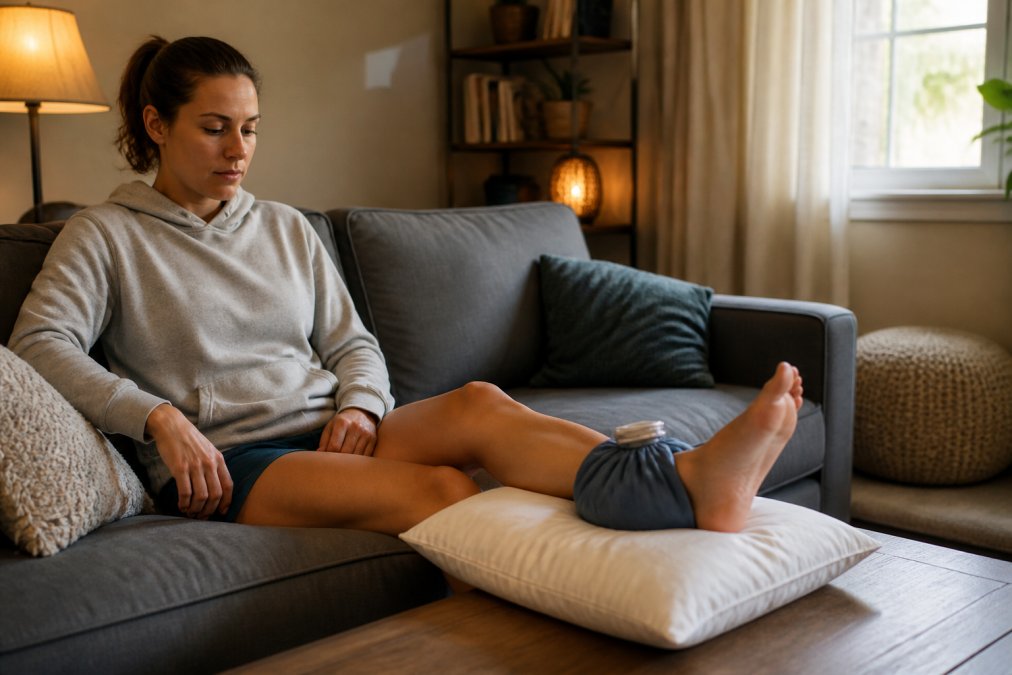
Cold therapy reduces pain and limits the initial inflammatory response by causing vasoconstriction. Apply an ice pack wrapped in a thin cloth for 15 to 20 minutes every two to three hours during the first 48 hours. Never apply ice directly to skin.
Compression with an elasticized wrap controls swelling by providing external pressure that counteracts fluid leakage into surrounding tissue. Wrap from the toes upward toward the calf to prevent fluid pooling in the foot. The wrap should be firm but not so tight that it causes numbness or color changes in the toes.
Elevation above heart level is the most underused part of the protocol. The ankle needs to be higher than the hip. Thirty to 60 minutes of true elevation, three to four times daily, makes a measurable difference in how quickly swelling subsides.
How to Reduce Swelling in a Sprained Ankle
Swelling is driven by inflammation: the body sends fluid and immune cells to the injured site, which is necessary for healing but also the primary source of pain and limited range of motion.
Compression Wraps and Cold Therapy Timing
Cold therapy applied immediately after injury is most effective; cold applied 24 hours later has reduced impact on swelling. According to the American Academy of Orthopaedic Surgeons, cold therapy is most beneficial in the first 48 to 72 hours after soft tissue injury.
An elasticized compression wrap used consistently during waking hours provides continuous pressure that limits fluid accumulation. Remove it overnight to allow circulation, but reapply in the morning before standing.
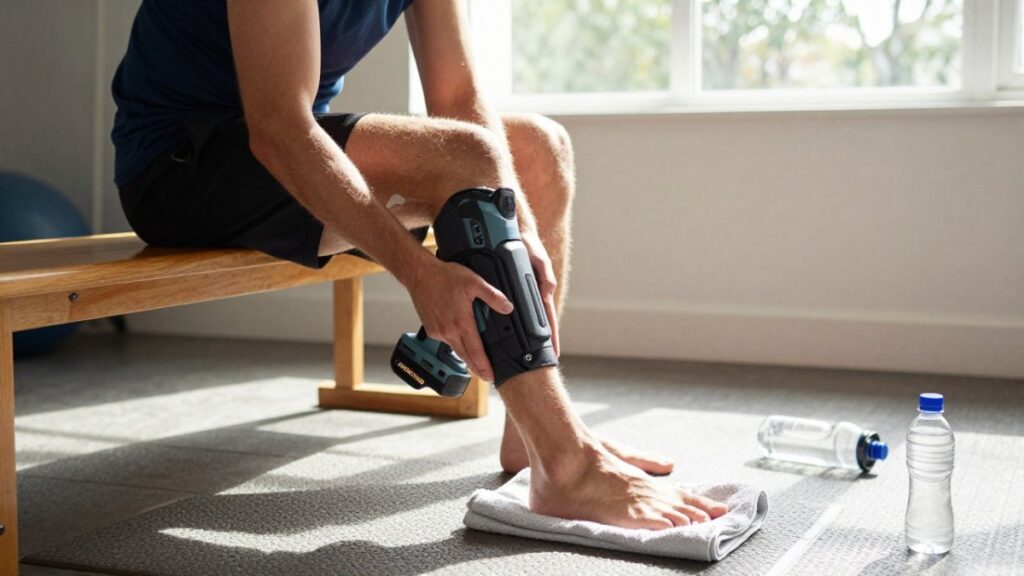
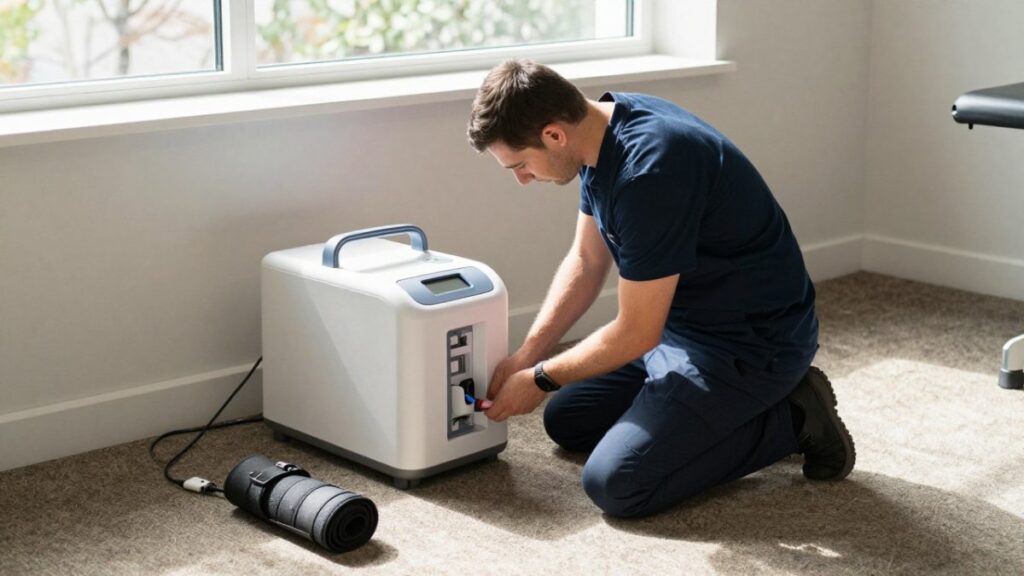
For athletes and patients who want precise control over both temperature and compression simultaneously, devices that combine cryotherapy and compression offer an advantage over standard ice packs. Swellaway's ProMOTION EV1 delivers targeted cryotherapy and compression in one cordless unit, with precise temperature control that eliminates guesswork and is particularly useful for practitioners managing multiple patients or athletes on the road.
Pain Management: Medication and Natural Options
Over-the-counter anti-inflammatory medications such as ibuprofen and naproxen sodium reduce both pain and inflammation in the acute phase. Acetaminophen addresses pain without the anti-inflammatory effect and is appropriate when GI sensitivity makes NSAIDs problematic. Always follow dosing instructions and consult a healthcare provider if you have existing conditions that affect medication choices.
Natural options include arnica gel applied topically and contrast therapy (alternating cold and mild heat) in the subacute phase, after the first 72 hours.
Avoid heat therapy in the first 72 hours. Applying heat to an acute sprain increases blood flow and worsens swelling. Heat has a role in later rehabilitation phases, not at the start.
Ankle Sprain Recovery Timeline: What to Expect
Ankle sprain recovery timelines vary significantly based on injury grade, individual health, and how well the acute phase is managed.
Grade I, II, and III Sprains
| Sprain Grade | Ligament Damage | Typical Recovery Timeline | Weight-Bearing Status |
|---|---|---|---|
| Grade I | Mild stretching, no tearing | 1 to 3 weeks | Full, with discomfort |
| Grade II | Partial tear | 3 to 6 weeks | Partial, with brace |
| Grade III | Complete rupture | 3 to 6 months | Non-weight-bearing initially |
Grade I sprains involve mild ligament stretching with no structural tear. Most people can return to low-impact activity within one to two weeks if they follow the acute management protocol correctly.
Grade II sprains involve a partial ligament tear. Pain, swelling, and instability are more pronounced and require a structured rehabilitation program and professional assessment to rule out associated bone injuries.
Grade III sprains represent complete ligament rupture. Surgery is not always required, but these injuries need professional management. Return-to-sport timelines extend to several months and depend heavily on physical therapy progression.
Phases of Healing: Acute, Subacute, and Functional
Acute phase (days 1 to 5): Inflammation, swelling, and pain management are priorities. R.I.C.E. protocol, protected weight-bearing, and no stretching or strengthening exercises.
Subacute phase (days 5 to 21): Swelling begins to resolve. Gentle range-of-motion work and early proprioception training begin. The ligament is still healing; avoid high-impact loading.
Functional recovery phase (week 3 onward): Progressive strengthening, balance training, and sport-specific movement patterns. The biggest mistake in ankle sprain recovery is skipping the subacute phase, going from rest directly to full activity. This is where most re-injuries occur.
Best Exercises for Sprained Ankle Rehab
Rehabilitation exercises are the single most important factor in preventing chronic instability after a sprained ankle. Passive rest alone does not restore the neuromuscular control that ligament injury disrupts.
Early Range-of-Motion Work: Ankle Alphabet and Towel Stretch
The ankle alphabet is the standard starting point for early range-of-motion rehabilitation. Sit with your leg extended and trace each letter of the alphabet in the air with your big toe, moving only at the ankle. This improves range of motion without loading the joint. Start this exercise on day two or three for Grade I sprains, and after the acute phase for Grade II injuries.
The towel stretch addresses Achilles tendon and calf tightness that develops during immobilization. Sit with your leg straight, loop a towel around the ball of your foot, and gently pull the towel toward you while keeping the knee straight. Hold for 30 seconds, three to five repetitions.
Strengthening and Proprioception Training
Proprioception is the ankle's ability to sense its position in space. A sprained ankle disrupts this sensory feedback, which is why people who have sprained once are significantly more likely to sprain again without targeted retraining.
According to the National Athletic Trainers' Association, proprioceptive training should begin as soon as weight-bearing is tolerated without significant pain.
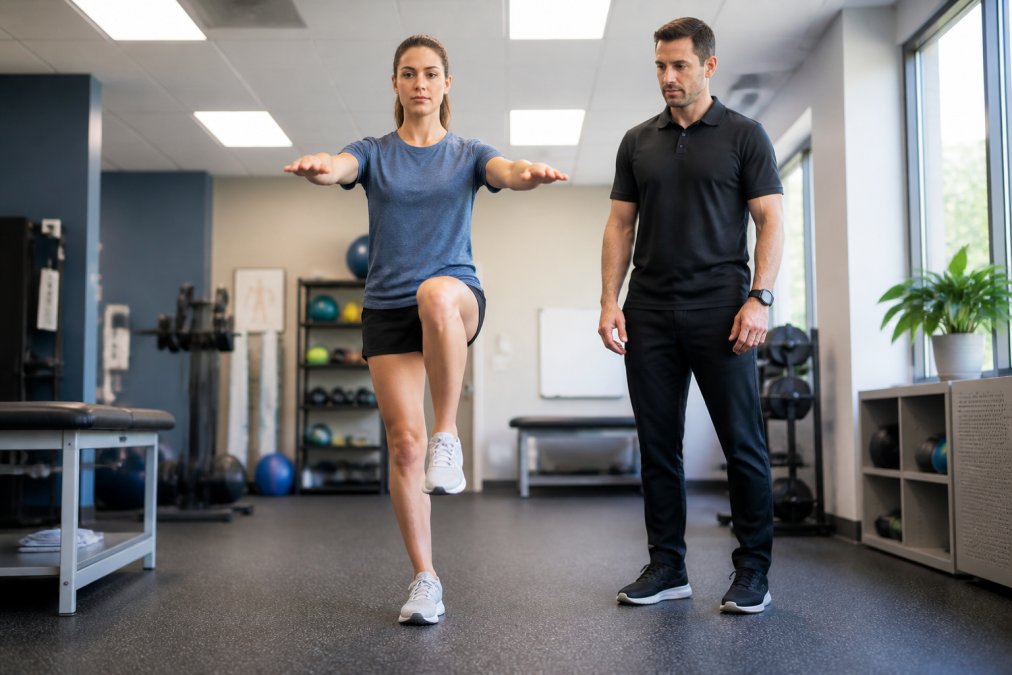
Start with single-leg standing on a flat, firm surface. Progress to eyes-closed standing, then to unstable surfaces such as a foam pad or balance board. Strengthening exercises focus on the peroneal muscles, the primary dynamic stabilizers of the lateral ankle. Resistance band exercises targeting eversion (turning the foot outward) directly strengthen these muscles. Calf raises, both bilateral and single-leg, restore the power needed for push-off during walking and running.
Progress proprioception training before adding resistance. A strong ankle that cannot sense its position is still an unstable ankle. Get the balance work right first, then layer in resistance.
How to Speed Up Ankle Sprain Recovery With Nutrition and Sleep
Tissue healing is a biological process that depends on the raw materials your body has available. Nutrition and sleep are not supplementary; they are structural.
Protein is the building block of ligament repair. Collagen, the primary structural protein in ligaments, is synthesized from amino acids. Increasing protein intake during the acute and subacute phases supports tissue repair. Vitamin C is a necessary cofactor in collagen synthesis.
Anti-inflammatory foods support the body's natural resolution of inflammation. Omega-3 fatty acids found in fatty fish, walnuts, and flaxseed have documented anti-inflammatory properties. Turmeric contains curcumin, which researchers study for its role in modulating inflammatory pathways.
Sleep positioning matters practically. Sleeping with the ankle unsupported and plantarflexed (pointed downward) overnight causes morning stiffness and slows range-of-motion recovery. Prop the ankle on a pillow to maintain a neutral position overnight.
Sleep quality itself drives tissue repair. Growth hormone, which drives tissue repair, is primarily secreted during deep sleep. Poor sleep slows healing measurably. Prioritize seven to nine hours and address any pain disrupting sleep with appropriate medication management.
The Mental Side of Ankle Sprain Recovery
Being sidelined by an ankle sprain creates real psychological stress for athletes and active individuals. Fear of re-injury, frustration of reduced capacity, and anxiety about losing fitness are legitimate concerns.
Fear of movement, called kinesiophobia in clinical settings, is a documented barrier to full functional recovery. People who are afraid of re-injury protect the ankle excessively, limit rehabilitation progression, and often end up with worse long-term outcomes.
Set process goals rather than outcome goals. Instead of "I want to be running in two weeks," focus on "I will complete my proprioception exercises today." This keeps motivation high when the timeline feels uncertain.
Maintain cardiovascular fitness through low-impact alternatives: swimming, upper body training, or cycling with the unaffected leg. Staying active reduces the psychological burden of injury significantly and limits muscle strength loss.
The psychological side of ankle sprain recovery is not separate from the physical side. Kinesiophobia slows rehabilitation. Addressing fear of re-injury directly, through progressive exposure and process goals, is part of the recovery protocol.
Return-to-Sport Testing and Preventing Future Sprains
Returning to sport before the ankle is ready is the most common cause of re-injury. The feeling of being "mostly fine" is not a reliable indicator of readiness. Functional testing is.
A standard return-to-sport progression includes:
- Full pain-free range of motion equal to the uninjured side
- Strength testing: peroneal and calf strength at least 90% of the uninjured side
- Single-leg balance test: 30 seconds stable on the injured side with eyes closed
- Hop tests: single-leg hop for distance, triple hop, and crossover hop, all within 90% of the uninjured limb's performance
- Sport-specific movement patterns: cutting, pivoting, and deceleration without pain or hesitation
Prevention of future sprains centers on maintaining proprioceptive training gains from rehabilitation and using appropriate external support during high-risk activity. A lace-up ankle brace during return to sport reduces re-injury risk significantly for athletes who have had a previous lateral ankle sprain, as noted by the American Physical Therapy Association.
Footwear matters too. Shoes with adequate lateral support and a firm heel counter reduce the mechanical risk of inversion injury during cutting movements.
When to See a Doctor or Podiatrist
Most Grade I ankle sprains can be managed conservatively at home. Several presentations require professional evaluation.
See a doctor or podiatrist if:
- You cannot bear any weight on the ankle immediately after injury
- There is significant bruising and swelling that does not begin to improve within 48 hours
- Pain is localized over the bone rather than soft tissue (this may indicate a fracture)
- The ankle feels unstable or gives way during walking after the acute phase has resolved
- Symptoms persist beyond three weeks without clear improvement
- You have had multiple ankle sprains on the same side (this suggests chronic instability requiring professional assessment)
The Ottawa Ankle Rules are a clinical decision tool used to determine when imaging is needed after an ankle injury. A physician or athletic trainer can apply these criteria to determine whether an X-ray is appropriate to rule out fracture.
Chronic instability is a real complication of undertreated ankle sprains. When the ligament heals in a lengthened state without proper rehabilitation, the ankle remains mechanically vulnerable. Physical therapy, and in some cases surgical reconstruction, addresses this. The time to prevent it is during the initial recovery.
Managing ankle sprain recovery well requires more than rest and ice. The acute phase sets the trajectory, rehabilitation exercises restore function, and attention to nutrition, sleep, and the psychological side of injury determines whether you return to full capacity or carry a vulnerability forward. Swellaway's ProMOTION EV1 combines targeted cryotherapy, compression, and heat therapy in a single cordless device, giving athletes, clinicians, and patients precise control over the therapy that matters most in the critical early days of recovery. Book a demo with Swellaway to see how the ProMOTION EV1 fits into your recovery protocol.
Frequently Asked Questions
Can an ankle sprain heal in 2 weeks?
A mild Grade I ankle sprain, where the ligament is stretched but not torn, can heal within 1 to 2 weeks with consistent rest, cold therapy, compression, and elevation. Grade II sprains involving partial ligament tears typically take 3 to 6 weeks. Grade III sprains with complete tears may require 3 months or longer, sometimes including physical therapy or orthopedic evaluation. Starting ankle sprain recovery steps immediately after injury gives you the best chance of hitting the shorter end of those timelines.
What's the worst day of a sprained ankle?
Days 1 through 3 are generally the most painful. Swelling, bruising, and inflammation peak during this acute phase as the body's soft tissue repair response kicks in. Edema can make the ankle feel stiff and tender to the touch. Applying cold therapy in 15-to-20-minute intervals, keeping the ankle elevated above heart level, and using a compression wrap during this window helps control swelling and makes the first few days more manageable.
What are four signs an ankle sprain is bad?
Four signs that warrant prompt medical attention: you cannot bear any weight on the ankle after 24 to 48 hours, there is significant bruising spreading up the leg, you feel or heard a popping sound at the time of injury, or the ankle appears visibly deformed. These may indicate a Grade III ligament tear, a fracture, or damage to surrounding soft tissue. A podiatrist or orthopedic specialist can confirm the severity with imaging and recommend appropriate treatment.
What is the role of cryotherapy and compression in soft tissue recovery?
Cold therapy slows blood flow to the injured area, which limits the initial inflammatory response and reduces edema in the acute phase. Compression from an elasticized wrap supports the ligament, minimizes swelling, and provides mild immobilization that protects the joint while it heals. Used together, cryotherapy and compression form two of the four pillars of the R.I.C.E. protocol. Devices that combine both therapies simultaneously can help maintain consistent temperature and pressure throughout each treatment session.