Quick Summary
Compression socks help ankle swelling by applying graduated pressure that is strongest at the ankle and eases up the leg, pushing fluid back toward the heart. Most people with mild swelling start at 15-20 mmHg, while swelling that is sudden, one-sided, or accompanied by chest pain needs prompt medical evaluation.
- Compression strength is measured in mmHg, and that number is the most important specification on the package.
- Mild, both-legs, end-of-day swelling is the classic case for 15-20 mmHg socks.
- Swelling reaching the calf or with varicose veins warrants a clinician, who may recommend 20-30 mmHg.
- Choose the lowest level that controls swelling comfortably, since stronger socks are harder to wear.
- Sudden, one-sided swelling or chest pain can signal a blood clot and needs prompt medical care.
Table of Contents
- How Compression Socks Help Reduce Ankle and Leg Swelling
- Compression Levels and mmHg Ratings Explained
- Best Socks for Swollen Feet and Ankles: Our Top Picks
- Choosing Compression Socks for Edema in Legs
- Sizing, Fit and Easy-On Options for Swollen Feet and Legs
- When Ankle Swelling Needs a Doctor, and When to Avoid Compression
- Building a Wear Schedule and Choosing Your Next Pair
- Frequently Asked Questions
How Compression Socks Help Reduce Ankle and Leg Swelling
Last Updated: November 7, 2026
Compression socks are one of the most common options people try when ankle swelling keeps coming back. They apply graduated pressure that is strongest at the ankle and eases as it moves up the leg, which helps push fluid back toward the heart.
Swelling in the ankles and lower legs, often called edema, can come from long periods of standing or sitting, travel, pregnancy, or medical conditions that affect circulation. After surgery, a guide to reducing swelling after orthopedic surgery covers broader approaches beyond socks. National Heart, Lung, and Blood Institute overview of venous disease describes how weakened vein valves can allow blood and fluid to pool in the lower legs.
Not every swollen ankle has the same cause. Swelling that appears in both legs after a long day is different from swelling in one leg that comes on suddenly. The second pattern can signal a blood clot, and it needs prompt medical evaluation before any self-treatment.
Compression Levels and mmHg Ratings Explained
Compression strength is measured in millimeters of mercury (mmHg), and the number tells you how much pressure the sock applies at the ankle. That single figure is the most important specification on the package, and it is the one most buyers ignore.
The Levels and Who They Are For
8-15 mmHg (mild). Light support for tired, achy legs and mild end-of-day puffiness. Often sold as travel or athletic recovery socks. Not typically strong enough for established edema.
15-20 mmHg (moderate). The most common over-the-counter range for mild swelling, long periods of standing or sitting, and travel. This is usually the entry point for someone with new, mild ankle swelling who has not been assessed by a clinician.
20-30 mmHg (firm). A common range for moderate edema and varicose veins.
30-40 mmHg and above (extra firm). Typically prescribed for more significant venous disease, lymphedema, or post-surgical care. These are medical devices in practice, not everyday socks, and should be fitted with clinical guidance.
Why Stronger Is Not Automatically Better
A higher mmHg number does not mean better swelling relief. Three things go wrong when people buy stronger than they need:
- The sock does not get worn. Firm compression is harder to don, hotter, and less comfortable. A 15-20 mmHg sock worn all day beats a 30-40 mmHg sock that stays in the drawer.
- The fit degrades. Stronger compression demands a more precise fit. A firm sock that is slightly too large slips and bunches; one slightly too small concentrates pressure and can cause skin irritation.
- It can be unsafe for some people. Compression reduces arterial inflow as well as venous pooling. In people with reduced arterial blood flow, firm compression can worsen symptoms rather than relieve them.
Most practitioners find that the right level is the lowest one that controls the swelling comfortably, not the highest one you can tolerate.
How Graduated Compression Actually Works
Graduated compression means the pressure is highest at the ankle and decreases as the sock moves up the leg. A 20-30 mmHg knee-high might apply 20-30 mmHg at the ankle and roughly 70-80% of that at the calf, depending on the manufacturer's profile.
This is why a tight, uniform band does not substitute for a compression sock. A sock that is tight everywhere, or a band that rolls at the top, creates a tourniquet effect rather than a gradient.
Watch out: if a sock leaves a deep, painful groove at the top of the calf, or your toes turn pale or cool, the fit or the pressure level is wrong. Remove it and reassess rather than pushing through.
Matching the Level to Your Situation
Use the mmHg rating together with your measurements and your symptoms. Mild, both-legs, end-of-day swelling after standing or travel is the classic case for 15-20 mmHg. Swelling that reaches the calf, comes with varicose veins, or persists despite mild compression is a reason to see a clinician, who may recommend 20-30 mmHg or higher and confirm your measurements. If you have diabetes, peripheral arterial disease, or heart failure, get the level confirmed before you wear compression at all.
The article breaks compression strength into four mmHg ranges, each tied to a typical use:
| mmHg range | Typical use | Note |
|---|---|---|
| 8-15 mmHg | Tired, achy legs, mild end-of-day puffiness | Not typically strong enough for established edema |
| 15-20 mmHg | Mild swelling, long standing or sitting, travel | Usual entry point without clinical assessment |
| 20-30 mmHg | Moderate edema, varicose veins | Often recommended after clinical assessment |
| 30-40 mmHg and above | Significant venous disease, lymphedema, post-surgical care | Medical devices, fitted with clinical guidance |
Best Socks for Swollen Feet and Ankles: Our Top Picks
Most ranking lists of compression socks for ankle swelling are built on brand marketing copy. This one is built on stated selection criteria, so you can see why a sock made the list and judge whether it fits your situation.
How We Selected
We screened candidates against five criteria that matter specifically for ankle swelling:
- Stated graduated compression in mmHg. Socks that do not publish a pressure rating at the ankle were excluded, because you cannot match an unstated pressure to a clinical recommendation.
- Sizing based on ankle and calf circumference. Socks sized only by shoe size tend to fit poorly on swollen ankles. We favored charts that ask for both measurements.
- Knee-high coverage as the default for edema. Ankle-only socks are included only where the swelling is confined to the foot and ankle.
- Materials and breathability. Moisture-wicking blends and Merino wool were favored over all-cotton and all-synthetic constructions for all-day wear.
- Ease of donning. Open-toe styles, heel tabs, and included donning aids were treated as meaningful advantages for anyone with limited hand strength.
Fit varies by individual leg shape, so treat these as starting points and confirm sizing against each manufacturer's current chart before buying.
The Picks
Best for mild, end-of-day swelling: a 15-20 mmHg knee-high. This is the range most often sold for tired, mildly swollen legs after standing or travel.
Best for swelling concentrated at the foot and ankle: an ankle-height sock in the 15-20 mmHg range. Ankle socks cover the foot and ankle only.
Best for travel and long sitting: a 15-20 mmHg knee-high in a thin, smooth knit. Thin knits slide under trousers and are less likely to bunch behind the knee during long periods of sitting.
What to Check Before You Buy
Confirm four things on the product page: the mmHg rating at the ankle, the sizing method (ankle and calf circumference, not shoe size), the length, and the return policy. Return policies vary, so check the seller's terms before buying, since a sizing error can be costly.
Watch out: a sock labeled only "compression" with no mmHg figure is not a medical compression sock, and its pressure is unknown. Skip it if you are buying for edema rather than general comfort.
If your swelling is moderate to severe, or you have a circulation or heart condition, treat this list as background reading and get the compression level confirmed by a clinician before you buy.
Choosing Compression Socks for Edema in Legs
Edema in the legs calls for steady, graduated pressure rather than tight, uniform compression. Look for socks that clearly state their pressure at the ankle. Consistent pressure through the day matters more than a high number on the label.
Breathable fabrics such as Merino wool or moisture-wicking blends can make daily wear more comfortable, which helps people stick with the routine.
Ankle-Specific Versus Knee-High Designs
Ankle socks cover the foot and ankle and suit people whose swelling is concentrated there. Knee-high designs extend up the calf and are generally recommended when swelling reaches the lower leg. Knee-high socks can feel more restrictive, so starting with the length your condition calls for is sensible.
Sizing, Fit and Easy-On Options for Swollen Feet and Legs
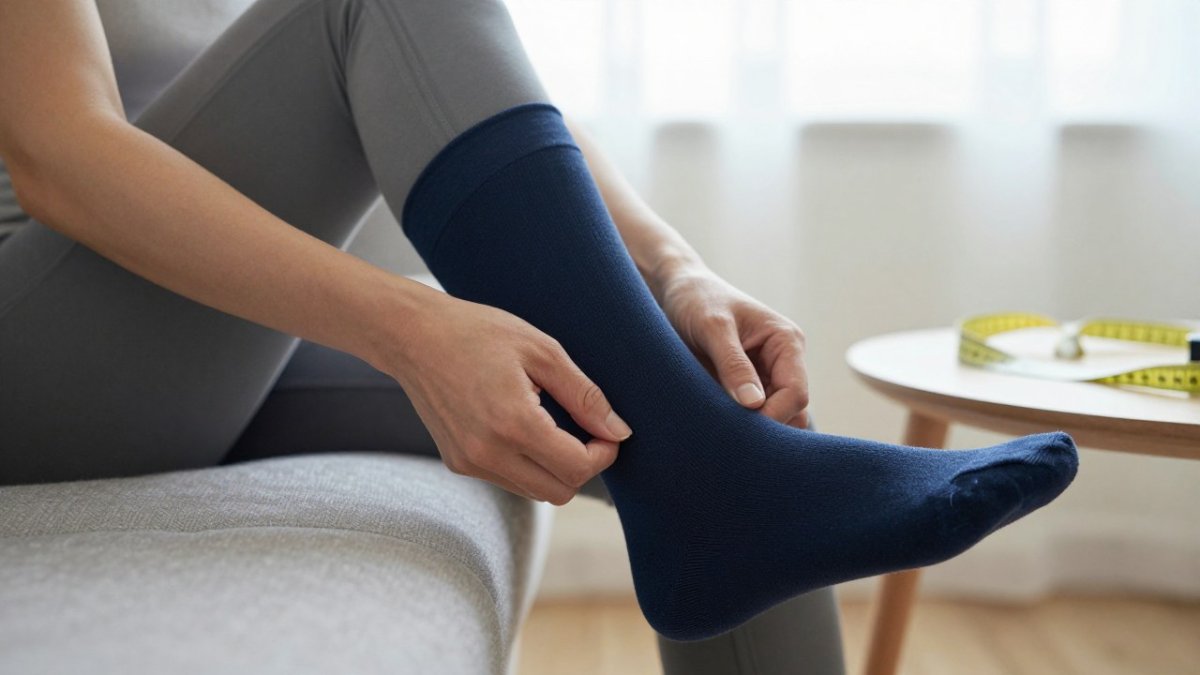
Swelling changes throughout the day, so measuring in the morning is usually more accurate. Measure the ankle at its narrowest point and the widest part of the calf, then compare against the manufacturer's chart. Many people with swelling need a larger size than they expect.
Ease of putting socks on matters for people with limited hand strength or flexibility. Look for open-toe designs, tabs, or donning aids. A plastic donning sleeve can also help.
When Ankle Swelling Needs a Doctor, and When to Avoid Compression
Seek prompt medical care if swelling is sudden, affects one leg only, is accompanied by chest pain, shortness of breath, or calf pain and warmth, or does not improve with rest and elevation. These can be signs of a serious condition such as a blood clot.
Compression is not appropriate for everyone. People with severe arterial disease, certain skin conditions, or uncontrolled heart failure should check with a clinician before using compression. Diabetes and peripheral neuropathy also call for medical advice, since reduced sensation can make skin damage harder to notice.
Building a Wear Schedule and Choosing Your Next Pair
Start with a few hours a day and increase gradually. If you are looking for a quick, low-cost alternative, see how to wrap a sprained ankle with an ACE bandage. Many people wear compression during the day and remove it at night, though a clinician may recommend otherwise. Replace socks when the elastic loosens, since worn-out compression no longer delivers the stated pressure.
Plan your next purchase based on how the current pair performed: note whether swelling improved, whether the fit held up, and whether you could put them on comfortably. Those observations make it easier to choose the right strength, length, and style.
Frequently Asked Questions
Will compression socks help my swollen ankle?
For many people with mild to moderate ankle swelling caused by prolonged sitting, standing or travel, graduated compression can help fluid move back up the leg and reduce puffiness during the day. Results vary, and swelling that is sudden, one-sided, painful or accompanied by shortness of breath needs prompt medical evaluation rather than self-treatment. Start with a moderate level, wear the socks during the day, and remove them at night unless a clinician advises otherwise. If swelling does not improve over a few weeks, talk with a doctor.
What compression level is best for ankle swelling?
Many people with everyday ankle swelling start with 15-20 mmHg, which is generally considered mild compression available over the counter. Stronger 20-30 mmHg options are often used for more persistent swelling, but higher levels usually require a fitting and sometimes a prescription. Check the mmHg rating on the package and choose the lowest level that gives relief. A healthcare provider can recommend the right strength if you have a medical condition.
Are ankle compression socks as effective as knee-high socks for swelling?
Knee-high socks apply compression over a larger area of the leg, which can be useful when swelling extends above the ankle. Ankle-length socks are easier to put on, are less bulky and are often enough when swelling is mostly confined to the foot and ankle. Effectiveness depends more on the compression level and fit than on length alone. If swelling reaches the calf or knee, knee-high styles are usually the better choice.
When should you avoid wearing compression socks for a swollen ankle?
Avoid compression socks and check with a doctor first if you have peripheral artery disease, severe skin problems, open sores, an active infection, or severe heart failure. Sudden, one-sided swelling with pain, warmth or redness can signal a blood clot and should be evaluated urgently. People with diabetes or nerve damage in the feet should consult a clinician before using compression. Stop wearing socks that cause numbness, tingling, skin discoloration or increased pain.