Quick Summary
Compression garment care means washing gently and avoiding heat, because these garments only work when their elastic fibers stay intact. Hand washing in lukewarm water with mild detergent is the gentlest option, and garments should always be air dried flat.
- Wash most compression garments every 1 to 2 days of wear, or after every use during sweaty activity.
- Hand washing is the gentlest option and usually safest for compression fabric.
- Use lukewarm water, mild additive-free detergent, and avoid wringing the garment.
- Never use bleach or fabric softener, since both weaken the elastic fibers.
- Never put compression garments in a dryer; always air dry them completely flat.
Table of Contents
Why Compression Garment Care Affects Fit and Performance (Source: National Library of Medicine guidelines)
Compression garment care matters because these garments only work as designed when they keep their elasticity. Every wash, dry cycle and rough handling wears down the fabric, and a worn garment grips less evenly. That loss of grip changes how the garment fits and how much support it gives. Good care is therefore part of getting the benefit the garment is designed to provide.
Compression garments are made from elastic yarns, often a blend of nylon and spandex, knitted to apply graduated pressure. The pressure is highest at the ankle and eases as it moves up the leg. Heat, harsh detergent and wringing can all stretch or break those fibers over time.
Careful handling protects three things:
- Fit: A garment that keeps its shape stays snug in the right places.
- Pressure: Consistent pressure depends on intact elastic fibers.
- Lifespan: Gentle care delays the point where replacement is needed.
A common mistake is assuming a garment that still looks fine is still working. Stretched or sagging fabric can lose its compression well before it shows obvious wear. Checking fit regularly is one of the simplest ways to tell when care is slipping.
How Often to Wash Your Compression Garment
Most people should wash a compression garment after every one or two days of wear. Daily wear picks up sweat, skin cells and dirt, all of which can break down the fabric and leave odors behind. Washing more often than needed adds wear, so the goal is regular cleaning without overdoing it.
Follow the care label first. The manufacturer's instructions set the baseline for how often and how to wash a specific garment. A garment worn during heavy activity or in hot weather may need washing after each use.
- Daily wear: Wash every 1 to 2 days.
- Light or occasional wear: Wash after each use or when visibly soiled.
- Sweaty activity or hot weather: Wash after every use.
Hand Washing or Machine Washing: Which Is Right for Your Garment
Hand washing is the gentlest option and usually the safest for compression fabric. It gives you full control over water temperature, pressure and rinsing. Machine washing adds tumbling and friction that can stress the elastic.
Machine washing is acceptable when the care label allows it and the garment is placed in a mesh laundry bag on a gentle or delicate cycle. Hand washing is the better choice for delicate fabrics, medical-grade garments and any garment the label says not to machine wash.
Choose hand washing if you want maximum protection for a valuable or medical-grade garment. Choose machine washing for everyday garments that the label allows, and always use the gentlest cycle available. To learn whether your plan could cover a device that might replace your garment, read whether health insurance covers pneumatic compression devices.
How to Wash Compression Stockings by Hand
Work gently and avoid twisting.
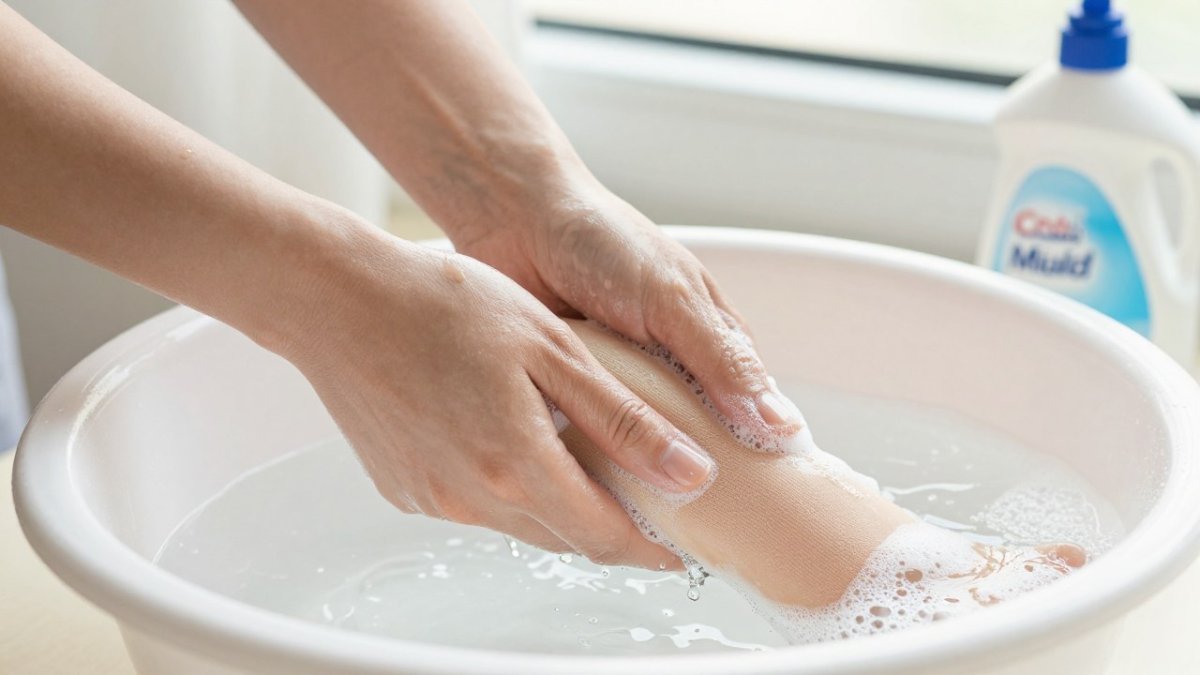
- Fill a clean basin with lukewarm water, not hot.
- Add a small amount of mild, additive-free detergent and stir until dissolved.
- Submerge the stocking and gently swish it through the water.
- Soak for about 5 minutes, then gently squeeze the suds through the fabric.
- Rinse thoroughly in clean, cool water until no soap remains.
- Press out excess water by rolling the stocking in a towel. Do not wring it.
How to Wash Compression Socks in a Washing Machine
If the care label permits machine washing, follow these steps to limit wear.
- Turn the socks inside out and place them in a mesh laundry bag.
- Wash on a gentle or delicate cycle with cool or lukewarm water.
- Use a mild, fragrance-free detergent. Skip bleach and fabric softener.
- Wash compression socks with similar items, not with heavy towels or jeans that cause friction.
- Remove promptly when the cycle ends and rinse if residue remains. (Source: Federal Trade Commission's care labeling rule)
Watch out: Fabric softener coats the fibers and can reduce grip, so leave it out of every wash.
How to Wash a Compression Garment After Liposuction
Garments worn after liposuction are often medical-grade and specific to your procedure. Follow your surgeon's or clinic's written instructions first, as they may specify washing frequency, products and drying methods.
Because recovery needs vary, the best course is to confirm the exact method with your care team before washing. This guidance is general information only and does not replace advice from a qualified professional.
How to Wash and Dry Compression Stockings Without Damage
Drying matters as much as washing. Heat is one of the fastest ways to weaken elastic.
- Never put compression garments in a dryer. High heat degrades the elastic fibers.
- Lay the garment flat on a clean towel and reshape it gently.
- Keep it out of direct sunlight, which can also weaken the fabric. If you want to reduce how often you need to wash and wear a garment, you can compare portable compression devices as an alternative.
- Allow it to air dry completely before wearing it again.
Keeping Your Compression Garment in Shape Between Washes
Small habits between washes help the garment last. Put it on and take it off carefully, rolling it down rather than pulling by the top edge. Keep nails and jewelry away from the fabric, and store the garment flat or loosely folded rather than stretched on a hanger.
Rotating two garments lets each one rest and dry fully, which helps maintain elasticity. For guidance on using a device at home between washes, see the compression device home use best practices guide. If one garment is wearing out, you can look at the best compression socks for ankle swelling to compare options. Check the garment for stretched areas or loose spots regularly, as these signal it may be time to replace it.
Frequently Asked Questions
Can I use bleach on compression garments?
No. Bleach breaks down elastic fibers and weakens compression. Use only mild, additive-free detergent.
Is fabric softener safe for compression fabric?
Avoid it. Fabric softener coats the fibers and can reduce the garment's grip.
How long does a compression garment last?
Lifespan depends on wear and care. Replace the garment when it stretches out, loses its snug fit or no longer feels supportive.
Can I put my compression garment in the dryer?
No. Heat damages the elastic, so always air dry flat.
Last Updated: November 21, 2026
Frequently Asked Questions
How many times can you wear compression stockings before washing them?
Most people should wash compression stockings after every day of wear. Sweat, skin cells and body oils break down the elastic fibers over time, and a garment that goes unwashed can hold bacteria and odor. If you only wear a pair for a few hours on a light day, check the manufacturer's care label, since some fabrics tolerate longer wear before a wash.
Can you wash compression socks in a washing machine?
Many compression socks can go in a washing machine, but only on a gentle or delicate cycle with cool or lukewarm water and a mild, additive-free detergent. Place them in a mesh laundry bag to reduce friction, and avoid bleach, fabric softener and high heat. Always confirm with the manufacturer's care label first, because some medical-grade garments are meant to be hand washed only.
How should you dry compression garments?
Air drying is the safest method. Roll the garment in a clean towel to press out excess water, avoiding wringing, which can stretch the elastic. Then lay it flat or hang it out of direct sunlight. Tumble drying, especially on high heat, can weaken the elastic and reduce compression, so avoid it unless the care label explicitly permits low heat. Keep the garment away from radiators and heaters as well.
How do you wash compression stockings with a silicone band?
Use cool or lukewarm water and a mild detergent, and rinse thoroughly. Turn the stocking inside out before washing to reduce wear on the silicone, and air dry it flat. Check the band for residue or lint after each wash, since buildup can reduce its grip and cause the stocking to slip during the day.